


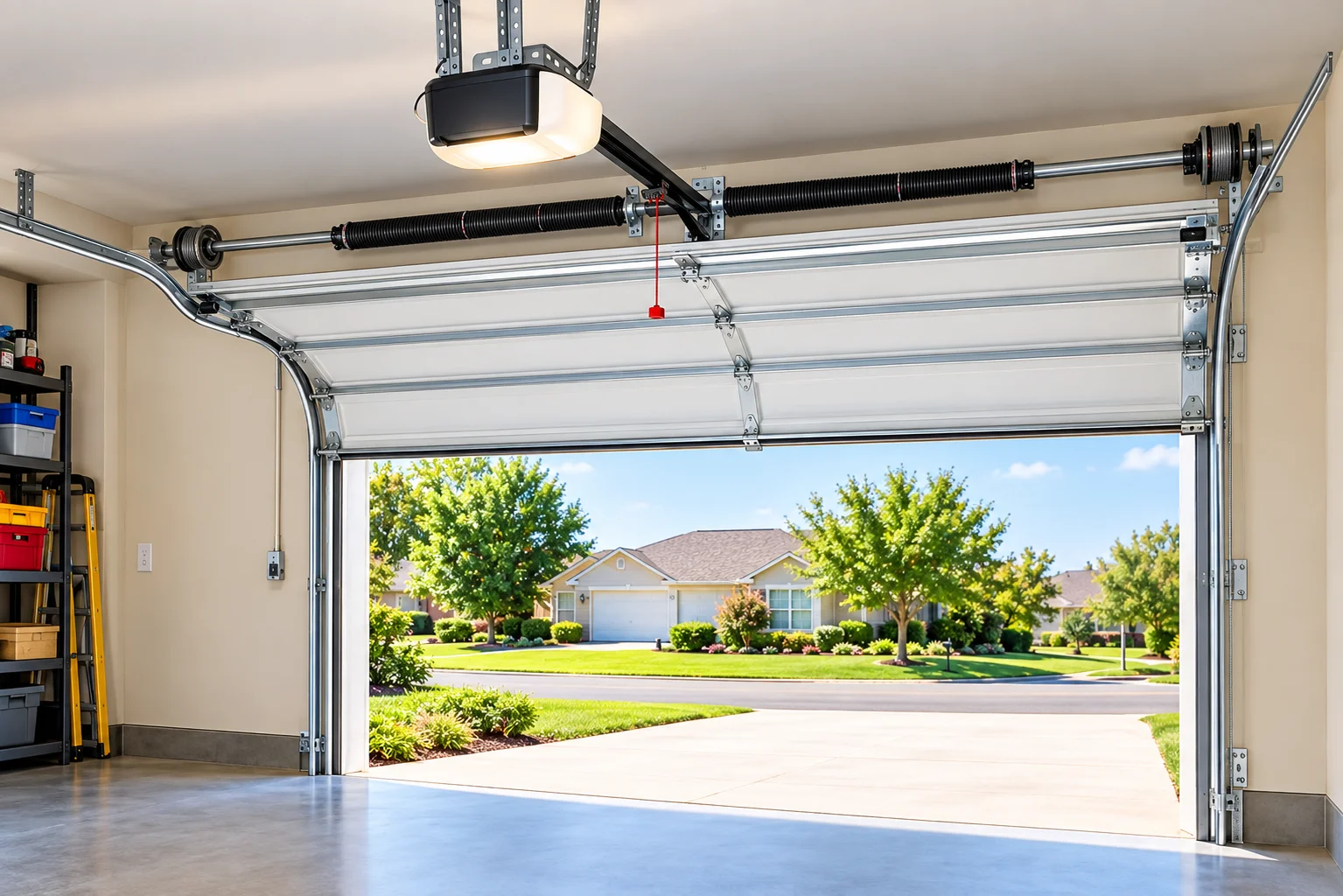
A garage door may look simple from the driveway, but its movement depends on several mechanical and electrical parts working in sync. Panels, tracks, rollers, cables, springs, sensors, and the opener all have separate jobs, and trouble in one area can quickly affect the others. When a door starts moving unevenly, Your Garage Door Pro in Columbus area can assess the full system rather than focusing only on the component producing the most obvious symptom. That whole-system approach matters because a noisy roller, strained opener, or crooked section may actually be the result of poor balance elsewhere in the assembly.
Table of Contents
The Door Is Only One Part of the Mechanism
Sectional doors are among the most common designs, using multiple horizontal panels connected by hinges. Rollers attached to those sections travel through vertical and horizontal tracks as the door opens. Different track configurations can accommodate ordinary ceilings, unusually high openings, limited headroom, or vertical movement in certain commercial settings. The choice of material also affects the system because insulation, glass, steel, wood, and other construction options can significantly change the door’s weight.
The tracks and rollers guide that weight, but they are not responsible for carrying all of it. A counterbalance system does much of the lifting work, typically using torsion or extension springs. Cables, drums, and springs work together so that a door weighing hundreds of pounds can move with comparatively little effort. This is also why spring and cable problems deserve caution: these parts operate under substantial tension, making adjustment or replacement very different from ordinary household maintenance.
Good Performance Starts With Compatible Parts
The opener needs to match the physical door rather than compensate for problems with it. Traditional trolley-style openers move a carriage along a rail, while side-mounted systems operate from the torsion assembly. Track layout, available ceiling space, door weight, and the way the door travels can all affect which configuration is practical. An opener that repeatedly struggles may therefore be revealing a balance or hardware problem rather than simply reaching the end of its useful life.
These relationships become even more important when a door opens dozens or hundreds of times during a busy week. Commercial installations often have higher cycle demands, heavier construction, larger openings, and greater consequences when a door becomes unavailable. Proper insulation, suitable hardware, correct operator sizing, sound weather seals, and smooth track alignment can improve the efficiency of commercial garage systems by reducing unnecessary strain and helping the door complete each cycle consistently. Matching components to the expected workload can also reduce premature wear and avoid placing excess demand on the operator.
Small Changes in Movement Can Reveal Bigger Problems
Garage doors rarely need to fail before something is wrong. Slower travel, shaking, scraping, popping noises, uneven gaps, or a door that stops partway can all indicate developing mechanical trouble. A door that suddenly feels unusually heavy when operated manually may have lost some of its counterbalance support, while jerky movement can point toward rollers, tracks, cables, or alignment. An opener that runs while the door refuses to move can likewise indicate a mechanical issue rather than an electrical one.
The most useful maintenance approach is to combine simple observation with periodic system checks. Keep the track area clear, make sure safety sensors are unobstructed, and pay attention to changes in sound, speed, balance, or movement. At appropriate intervals, the system should also be checked for roller wear, loose hardware, weather-seal deterioration, opener performance, spring condition, and cable damage. How often that is needed depends largely on use: a lightly operated residential door experiences far less wear than a commercial door cycling repeatedly throughout the day. Springs, tensioned cables, drums, and major track adjustments should be treated as repair work because they involve significant stored force.
Also Read : The Best Girls’ Nights Start With Simple Food and Better Drinks
Repair or Replace? Look Beyond the Failed Part
Not every problem means the entire door needs replacement. A damaged panel, worn roller, faulty opener, broken spring, or other individual component may sometimes be repaired while the rest of the system remains in good condition. Replacement becomes more reasonable when damage is widespread, compatible parts are difficult to obtain, repeated failures are occurring, or the existing door no longer fits the property’s insulation, security, clearance, or operating requirements.
The most useful way to think about a garage door is as a coordinated system rather than a single moving panel. Door weight affects springs, springs affect balance, balance affects the opener, and alignment affects nearly everything in motion. Whether the door serves a household garage or a busy work area, compatible components and timely attention to unusual performance can support smoother, safer, and more dependable operation over the long term.

