


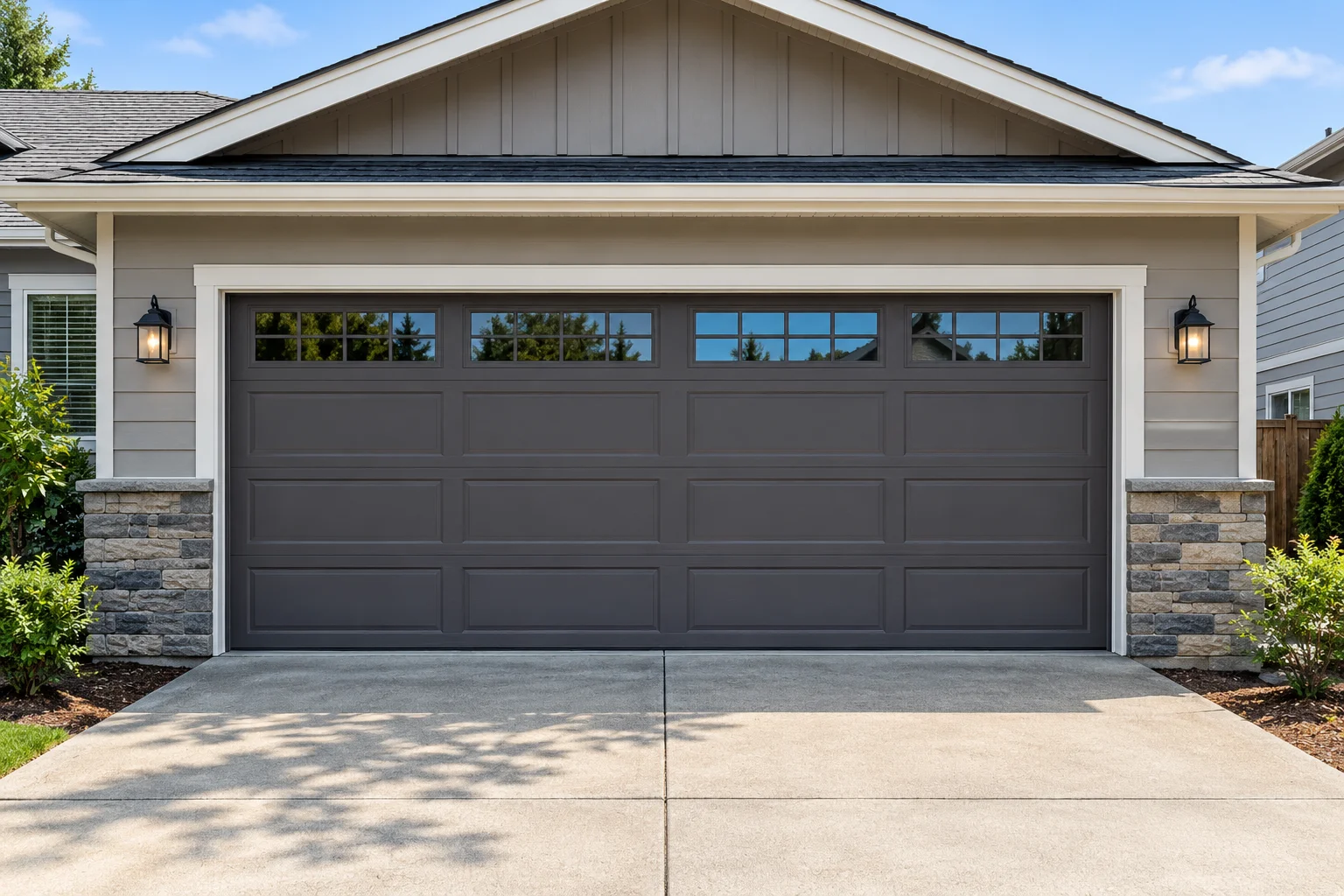
A two-car garage does not always provide two-car convenience. Separate door openings can make parking feel tighter than the interior dimensions suggest, especially when a center post limits the angle available for pulling in or backing out. When the goal is to improve access rather than simply replace aging equipment, the project may extend into the kind of combined structural and door work involved when homeowners explore Mammoth Door & Construction. Converting two smaller openings into one wider entrance can improve everyday usability, but the benefits depend heavily on how the garage is built and what changes the existing structure can safely accommodate.
The appeal is easy to understand. One broad opening gives a driver more freedom to approach at an angle, leaves fewer obstacles near mirrors, and eliminates the need to center a vehicle within a relatively narrow bay. This can be especially noticeable when vehicle sizes change over the years. A garage that was comfortable for two compact cars may feel far less forgiving with wider crossovers, pickups, or vehicles that need additional room for doors to open.
Table of Contents
The Center Divider Changes More Than the Appearance
Removing the section between two garage doors can make the entrance look simpler, but its structural role matters far more than its appearance. The center framing may help carry loads from the roof, ceiling, or living space above the garage. If it does, taking it out requires a replacement support system capable of spanning the wider opening. That often involves a new header or beam along with changes to the framing at each side.
Even when the center section is not carrying a major load, widening the opening can affect siding, masonry, trim, electrical components, weather sealing, and the finished surfaces surrounding the door. That is why the feasibility of a conversion should be established before choosing a door style. The dimensions and appearance of the replacement matter, but only after the opening itself has been shown to be suitable for the change.
A Wider Door Is Still a Complete Mechanical System
Changing the opening is only half of the project. A larger door still relies on correctly sized springs, properly aligned tracks, rollers, cables, safety equipment, and an opener suited to the weight and dimensions of the new assembly. These components work as a system, so problems in one area can create uneven movement, excess strain, noise, or premature wear elsewhere. The service-and-installation side represented by http://samedaygarage.com therefore connects directly with the broader conversion question, since reliable operation after the structural work depends on correct setup and ongoing attention to the moving components.
A wider door may also behave differently from two independent smaller doors. With separate openings, a problem affecting one door does not necessarily prevent use of the other bay. With one large opening, however, a broken spring, damaged track, or failed opener can affect access to the entire garage. That does not automatically make a single door less practical, but it does make maintenance and system condition more important.
When Keeping Two Doors May Make More Sense
A conversion is not automatically an improvement for every home. Two separate doors can provide useful redundancy and may fit the proportions of certain exteriors better. They can also make sense when the existing openings already offer adequate clearance, and the center framing would require substantial structural work to remove.
Cost can influence the decision as well. Replacing two doors within their existing openings may involve less construction than creating one completely new span. A conversion can include demolition, temporary support, structural framing, exterior repairs, a larger door, updated hardware, opener changes, permits, and inspection requirements. The final expense therefore depends on considerably more than the price of the door itself.
There is also little reason to undertake a major conversion simply because two doors seem old-fashioned. If both openings work well for the household, the doors are reliable, and vehicles fit comfortably, replacement within the existing layout may solve concerns about insulation, noise, deterioration, or appearance without altering the structure.
When One Large Opening Solves a Real Problem
The strongest case for conversion is usually functional. If drivers regularly struggle with the center post, have difficulty adjusting their angle, or cannot comfortably maneuver wider vehicles through the existing bays, eliminating the divider can address a problem that ordinary door replacement will not fix.
It may also improve flexibility inside the garage. A single opening does not enlarge the floor itself, but it gives vehicles more freedom in how they enter that floor space. Someone may be able to park slightly off-center when additional room is needed beside one vehicle, maneuver equipment more easily, or use the garage differently without two fixed entry lanes controlling the layout.
Repair, Replacement, and Conversion Are Different Decisions
It helps to separate three questions that are often treated as one. The first is whether the current door system needs repair. Worn rollers, broken springs, damaged cables, misaligned tracks, sensor trouble, or opener problems may be correctable without changing the doors themselves. Routine inspection can also identify smaller issues before they interfere with safe operation.
The second question is whether the doors have reached the point where replacement makes sense. Repeated failures, extensive physical damage, poor fit, deteriorated sections, or several worn components at once can shift the balance toward replacement rather than continued repairs.
Conversion is the third and most substantial decision. It changes not only the door but the opening it occupies. That makes it worthwhile primarily when the existing two-door arrangement itself is creating a limitation that a normal repair or replacement would leave untouched.
Also Read : Questions to Ask Before Signing a Workers’ Compensation Settlement
Look at the Garage as a Whole
Before changing two openings into one, the most useful assessment is broader than simply asking whether a larger door will fit. The framing above and beside the openings, clearance for tracks and hardware, condition of the surrounding structure, electrical setup, exterior finish, opener requirements, and future service access all affect the result.
That broader view also makes it easier to compare options fairly. In some garages, converting to one opening can noticeably improve maneuverability and simplify the entrance. In others, the structural expense may outweigh a relatively small convenience gain.
The right configuration is ultimately the one that solves an actual problem without creating unnecessary complexity. Two doors can remain perfectly practical when they provide enough clearance and operate reliably. One larger opening can be a meaningful improvement when the divider consistently gets in the way. Understanding the structure, mechanical system, and everyday use of the garage before making the change is what turns the project from a cosmetic idea into a well-planned upgrade.

