

Las Vegas is a city that never settles for ordinary. From its architecture to its entertainment, everything here is designed to leave an impression. The dining scene is no different. In a city packed with restaurants competing for attention, the finest establishments distinguish themselves not just through food, but through an entire sensory experience — one that begins the moment a guest walks through the door and lingers long after the last course is cleared. Understanding what truly separates elite dining from the average restaurant experience reveals how deeply intentional every detail must be.
The Role of Ambiance in Elevating the Dining Experience
Ambiance is not a single element — it is the sum of dozens of carefully considered decisions. Lighting, acoustics, spatial design, table spacing, and even the temperature of a room all contribute to how a guest feels while seated. In a city as dynamic as Las Vegas, where restaurants compete with casinos, shows, and spectacles, a truly exceptional dining room must create its own world. The best establishments understand that the atmosphere should feel like a destination in itself, not merely a backdrop for a meal.
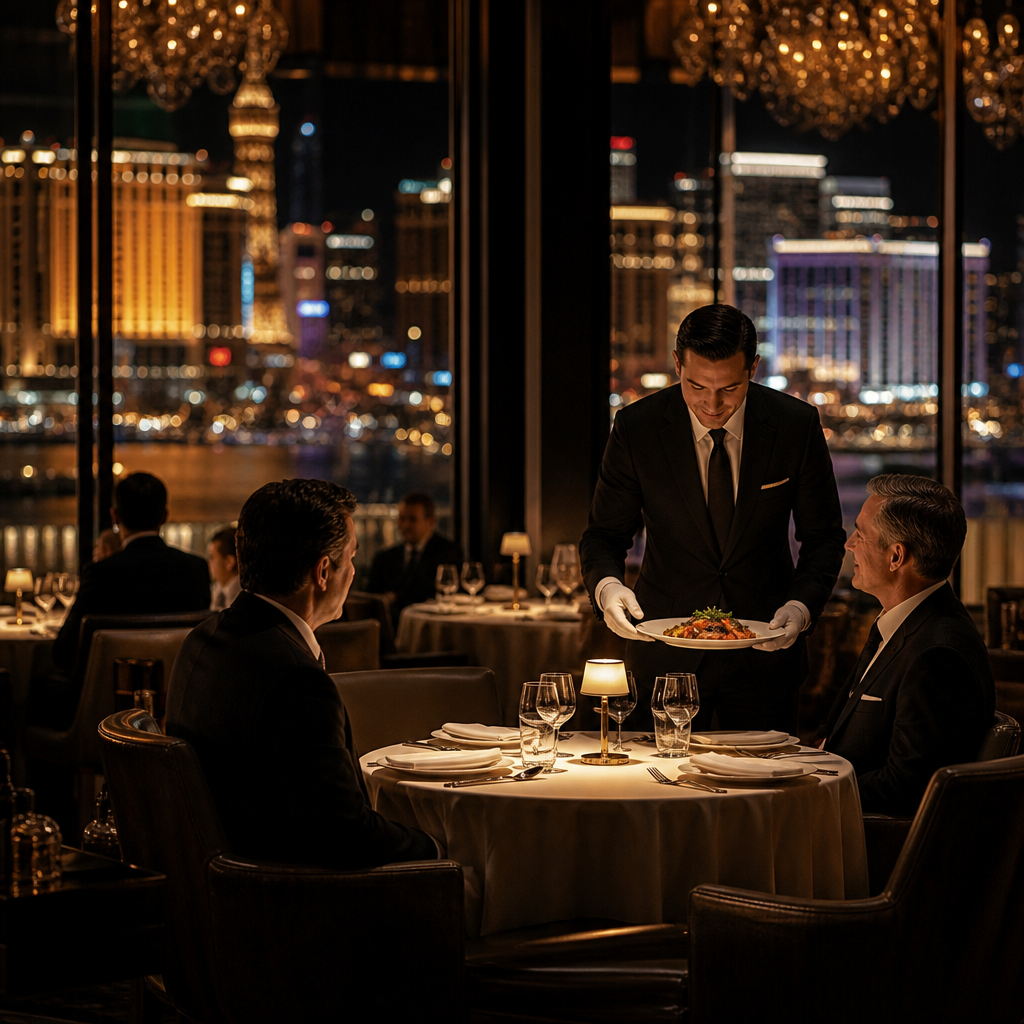
Lighting, in particular, plays a transformative role. Warm, low lighting creates intimacy and signals to guests that they are in a space designed for unhurried enjoyment. Harsh overhead lighting, by contrast, can make even the most beautifully plated dish feel clinical. The finest Las Vegas dining rooms layer their lighting — combining ambient sources with accent fixtures — to create depth and visual warmth that flatters both the food and the guests enjoying it.
Acoustics and Comfort: The Underrated Pillars of Great Dining
Sound is one of the most overlooked aspects of restaurant design, yet it profoundly affects the dining experience. A room that is too loud forces guests to strain through conversation, turning what should be a relaxed evening into an exhausting one. The best fine dining spaces invest in acoustic panels, soft furnishings, and strategic table placement to absorb sound and maintain a comfortable noise level. Guests should be able to speak at a natural volume and feel genuinely at ease throughout their visit.
Seating comfort is equally critical. Chairs that are too rigid, booths that are too narrow, or tables that are too close together all chip away at the sense of luxury a fine dining restaurant promises. Premium upholstery, generous table spacing, and thoughtful ergonomics communicate respect for the guest’s time and body. When a diner can sit for two or three hours without physical discomfort, the meal becomes an experience rather than an obligation.
Table Arrangements and the Art of Spatial Storytelling
How tables are arranged within a dining room tells a story about a restaurant’s values. Crowded layouts prioritize revenue over experience, while thoughtfully spaced arrangements signal that the establishment values privacy, comfort, and the quality of each individual visit. In Las Vegas, where high-profile guests and intimate celebrations are common, the ability to offer a sense of seclusion within a bustling room is a genuine competitive advantage.
Private dining rooms and semi-private alcoves have become increasingly sought after. These spaces allow groups to celebrate milestones, conduct business conversations, or simply enjoy a meal without the distraction of a full dining room. The best restaurants design these areas with the same level of care as their main floor — ensuring that the intimacy of a private space does not come at the cost of service quality or aesthetic appeal.
The Connection Between Presentation and Perceived Value
There is a reason why food always seems to taste better in a well-designed restaurant. The visual context in which a dish is served directly influences how the palate perceives it. Elegant plateware, crisp linens, and polished glassware all prime the guest’s expectations before the first bite. According to expert insights on why food tastes better at restaurants, factors like preparation technique, ingredient quality, and the overall dining environment combine to create a perception of superior flavor that goes well beyond the plate itself.
This principle extends to every touchpoint in the dining room. The weight of a fork, the texture of a napkin, the clarity of a water glass — each detail either reinforces or undermines the promise of excellence. Fine dining restaurants that understand this invest in tableware and linens as seriously as they invest in their kitchen equipment, because they know that the table is the final stage on which the culinary performance is delivered.
Stubborn Seed Las Vegas: A Study in Intentional Dining Design
Among the establishments that have redefined what elevated dining looks like in the desert, Stubborn Seed Las Vegas stands in a category of its own. As a fine dining restaurant in Las Vegas, Stubborn Seed brings a philosophy rooted in creative precision and genuine hospitality. Every element of the dining room — from the curated seating arrangements to the considered use of light and texture — reflects a commitment to making guests feel that their evening is something truly worth remembering. The kitchen’s approach to seasonal, ingredient-driven cuisine is matched by an environment designed to honor the food being served.
Service as an Extension of the Space
No matter how beautiful a dining room is, the quality of service determines whether a guest feels genuinely welcomed or merely processed. In the finest Las Vegas restaurants, service is choreographed with the same precision as the kitchen. Staff members are trained not only in menu knowledge but in reading the room — understanding when a guest wants conversation and when they prefer quiet, when to clear a plate and when to allow a moment to linger. This attentiveness transforms a meal into a memory.
For guests who enjoy exploring dining options across different price points and occasions, understanding the full spectrum of restaurant offerings can be valuable. Whether planning a celebratory dinner or a casual midweek outing, resources like BJ’s happy hour menu options offer useful guidance for those moments when the occasion calls for something more relaxed without sacrificing quality.
Why Las Vegas Continues to Raise the Bar for Restaurant Experiences
Las Vegas has long attracted world-class culinary talent, and the city’s appetite for excellence shows no signs of slowing. The competitive nature of the market pushes restaurants to continuously refine their offerings — not just on the plate, but in every dimension of the guest experience. Seating design, acoustic engineering, lighting strategy, and service training are no longer afterthoughts; they are core components of what it means to operate at the highest level in this city.
For diners, this means that a visit to a truly exceptional Las Vegas restaurant is never just about eating. It is about stepping into a space that has been designed, from the ground up, to make every moment feel significant. The best restaurants in this city understand that their guests are not simply purchasing a meal — they are investing in an experience, and they deserve every detail to reflect that investment.
Conclusion: The Details Define the Difference
What separates a memorable fine dining experience from a forgettable one is rarely a single dramatic element. It is the accumulation of small, deliberate choices — the way light falls across a table, the distance between chairs, the weight of a menu in hand, the timing of a server’s approach. In Las Vegas, where the standard for spectacle is already extraordinarily high, the restaurants that endure are those that understand this truth and commit to it without compromise. For anyone seeking a dining experience that honors every one of these details, the city’s finest tables are waiting.

