


Key Takeaways
- The right home is not always the newest, largest, or least expensive option.
- Location influences convenience, privacy, transportation costs, recreation, and future resale appeal.
- A fair comparison includes the full cost of ownership, not only the purchase price or mortgage payment.
- Condition, insurance, taxes, utilities, and maintenance needs can change a home’s real value.
- A consistent scorecard can make it easier to compare several homes with clarity.
Comparing homes in White Bear Lake requires more than choosing the best kitchen or the lowest asking price. Buyers may be weighing older neighborhoods, newer construction, lake-area properties, access to daily services, and the practical realities of Minnesota weather. For buyers reviewing White Bear Lake homes for sale, Ornell Group provides current property listings and area-focused real estate guidance for White Bear Lake, Mahtomedi, White Bear Township, and nearby northeast Twin Cities communities. Its local focus can help buyers consider neighborhood setting, property type, waterfront considerations, and the differences between nearby service areas.
The strongest choice is usually the home that supports your routines, fits your complete budget, and leaves room for expected maintenance. A property can be beautiful at a showing and still be a poor fit if the commute, layout, condition, or ongoing costs create daily frustration.
Table of Contents
Why List Price Is Not Enough
Two homes with similar list prices can have very different ownership costs. One may have a newer roof, efficient mechanical systems, usable storage, and a short drive to regular destinations. Another may need exterior work, have higher utility demands, or require more time in the car. Square footage, lot size, age, condition, and included features all matter, but their value depends on how they serve your household.
For example, a lower-priced home farther from work and errands may look like a bargain until buyers add transportation, needed repairs, and time. A higher-priced home in better condition or closer to daily destinations may be more manageable over the first several years.
Start With Daily Life
Before comparing finishes, picture a normal week in each property. Consider where coats, sports gear, groceries, bicycles, and seasonal equipment will go. Think about bedroom placement, parking, home-office needs, outdoor space, and whether the layout works for current routines and likely changes.
- Drive the route to work, school, groceries, health care, and favorite local destinations.
- Check internet options if remote work or streaming is important.
- Consider winter routines, including snow removal, driveway access, and storage for equipment.
- Decide whether yard work, boating, walking trails, or outdoor entertaining are priorities.
Compare Location Beyond the City Name
White Bear Lake addresses can offer very different experiences depending on the street and surroundings. Visit at more than one time of day and listen for traffic, train activity, neighborhood noise, and seasonal recreation. Check sun exposure, privacy, drainage patterns, sidewalks, trail access, and the character of neighboring homes.
Lake-area buyers should also distinguish between being near the water and having practical access to it. The public information about White Bear Lake identifies communities around the lake, public access points, fishing opportunities, and aquatic invasive species considerations. Those details can help buyers ask more informed questions about recreation, shoreline use, and seasonal activity.
Calculate the Full Cost of Ownership
Build a monthly estimate for every serious property using the same assumptions. Include mortgage principal and interest, property taxes, homeowners insurance, mortgage insurance when applicable, utilities, association dues, lawn care, snow removal, and a reserve for routine repairs. Add commuting, parking, and transportation costs if one location changes your travel habits.
Taxes and insurance estimates can vary by property, while older homes may require a larger maintenance reserve. The goal is not to predict every expense perfectly. It is to compare homes using a realistic, consistent framework before emotions take over.
Review Condition, Repairs, and Property Risk
Fresh paint and updated fixtures should not distract from major systems. Review the roof, gutters, heating and cooling equipment, windows, electrical and plumbing systems, foundation, grading, drainage, basement, deck, driveway, and retaining walls. Ask for seller disclosures, available permits, repair records, and utility information.
For properties with shoreline, wells, septic systems, or unusual site conditions, buyers should use qualified professionals to evaluate relevant risks. An inspection can identify visible concerns, but it does not eliminate the need to understand insurance requirements, maintenance responsibilities, and future replacement costs.
Compare Financing With Real Numbers
The lowest advertised interest rate is not automatically the least expensive loan. Compare interest rate, annual percentage rate, points, lender credits, origination charges, total monthly payment, cash needed at closing, and whether the rate is fixed or adjustable. The Consumer Financial Protection Bureau explains how comparing loan estimates can help borrowers review lender-controlled costs and the five-year cost of borrowing.
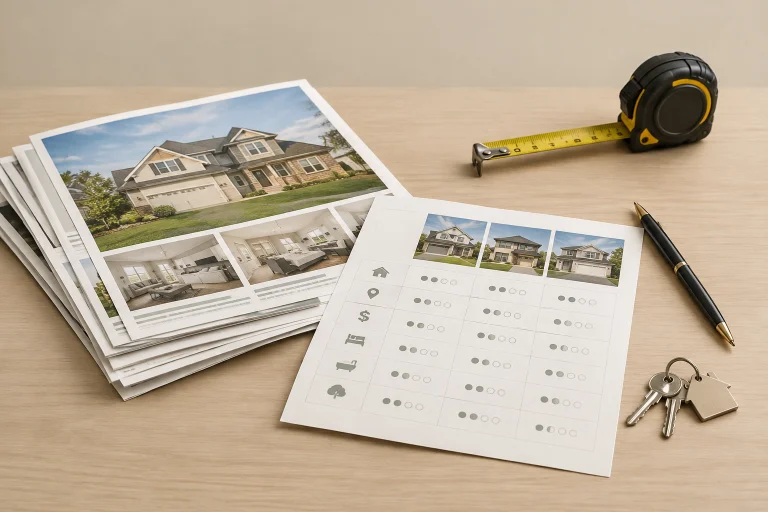
Build a Home Comparison Scorecard
Use a simple scoring system after each showing, before memories blur together. Rate each home from one to five, then give more weight to the categories that matter most to your household:
- Location: commute, convenience, noise, privacy, neighborhood setting, and future development.
- Total cost: payment, taxes, insurance, utilities, dues, and upkeep.
- Layout: room flow, storage, work areas, bedroom placement, and flexibility.
- Condition: major systems, visible maintenance, inspection concerns, and repair needs.
- Lifestyle fit: outdoor space, recreation, parking, pets, and everyday comfort.
- Resale appeal: location strength, practical floor plan, condition, and broad buyer appeal.
Questions to Ask Before an Offer
- What major improvements have been completed, and when?
- How old are the roof, mechanical systems, windows, and appliances?
- Have there been water, drainage, mold, foundation, or insurance issues?
- Are there easements, shared driveways, association rules, or special assessments?
- What are typical utility and maintenance costs?
- Are road, zoning, or development changes planned nearby?
- What terms are important to the seller besides price?
Final Checklist for a Smarter Decision
- Visit each serious property more than once, including at a different time of day.
- Drive the commute during a typical weekday when possible.
- Compare each home using the same budget assumptions and scorecard categories.
- Request insurance estimates before submitting an offer.
- Review disclosures and inspection findings carefully.
- Keep funds available for closing costs and early repairs.
- Separate true deal-breakers from features that can be changed later.
A confident White Bear Lake home purchase balances emotion with evidence. The best home should feel right, support daily life, fit the complete budget, and remain practical as needs change over time.

