


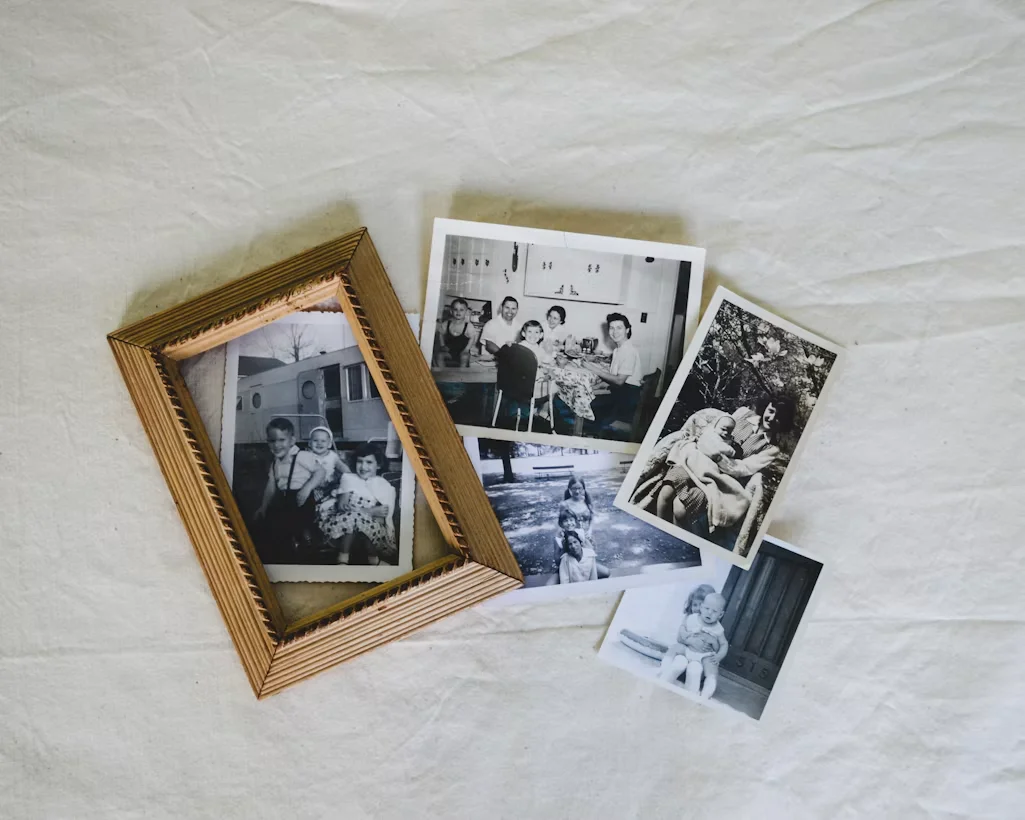
A dedicated memory corner gives family photographs and keepsakes a thoughtful place in your home. It can celebrate everyday moments, honor loved ones and help younger relatives connect names with family stories.
The display doesn’t need to fill an entire wall or follow a complicated design plan. A small table, shelf or quiet corner can become meaningful when every item has a clear reason for being there.
Table of Contents
Designate a Quiet Living Space
Look for a spot where people naturally pause, such as a living room corner, upstairs landing or reading nook. A console table about 30 to 36 inches wide often provides enough room for several framed photographs and one or two keepsakes without overwhelming the area.
Choose a location away from busy walkways, splashing water and strong direct sunlight. Sun exposure can fade printed photos, while a crowded hallway may leave frames vulnerable to bumps. If you prefer a wall-based arrangement, these family photo display ideas offer examples that work in spaces of different sizes. Use removable paper templates to test the placement before making any holes.
Select Sentimental Photographs
Start with five to seven photographs that represent different parts of your family story. You might include a wedding portrait, a candid vacation picture and an image from an ordinary Sunday dinner. A mix of milestone and everyday photos makes the arrangement feel personal.
Print copies instead of displaying irreplaceable originals, especially if an image is old or fragile. For relatives or pets who have passed away, personalized memorial picture frames can give a favorite photograph a meaningful place. Add a name, date or short message if that detail helps visitors understand the connection. Keep original photographs in acid-free sleeves and store them somewhere dry, dark and temperature-stable.
Choose Meaningful Display Accents
Pair photographs with a few objects that add context. A handwritten recipe card can sit near a grandparent’s kitchen photograph, while a small souvenir may complement a favorite travel image. Letters, postcards, children’s drawings and inherited trinkets also work well when they have an obvious link to the people pictured.
Vary the height of the display so each piece remains visible. Place a taller frame at the back, a medium one to one side and a low object near the front. Small plate stands can hold cards or flat keepsakes upright. Limit decorative items that carry no family meaning since they can distract from the stories you want the corner to preserve.
Balance Lighting and Warmth
Use soft, indirect light to make the corner inviting without exposing photographs to harsh glare. A nearby table lamp with a warm white bulb can illuminate the display in the evening. For an enclosed shelf, a low-heat LED strip offers gentle light and keeps the arrangement easy to see.
Check the display from the room’s usual seating areas. Glass that reflects a window may hide the image during daylight, so turn the frame slightly or move the lamp. Warmth can also come from materials. Wood frames, a woven tray and a small fabric runner create a comfortable setting, while matching metal finishes lend a cleaner look. Keep candles unlit near paper photographs and delicate keepsakes.
Keep the Arrangement Minimal
Give every photograph and object enough open space to stand on its own. A useful starting point is two to three inches between tabletop frames. On a wall, consistent spacing of about two inches can unite frames with different sizes and finishes. The creative photo wall ideas show how a clear layout can keep a larger collection orderly.
Rotate a few images for birthdays, anniversaries or family visits instead of expanding the display every time you find another favorite. Dust frames with a dry microfiber cloth and inspect older prints every few months for fading or moisture. Leave one open spot for a future photograph, giving the corner room to grow along with your family.
A finished memory corner should feel familiar the moment you see it. Add a small handwritten label behind each frame with the names, place and approximate year. Those details stay out of sight during daily life, yet they ensure that the stories connected to each photograph remain available for the next person who asks.

