


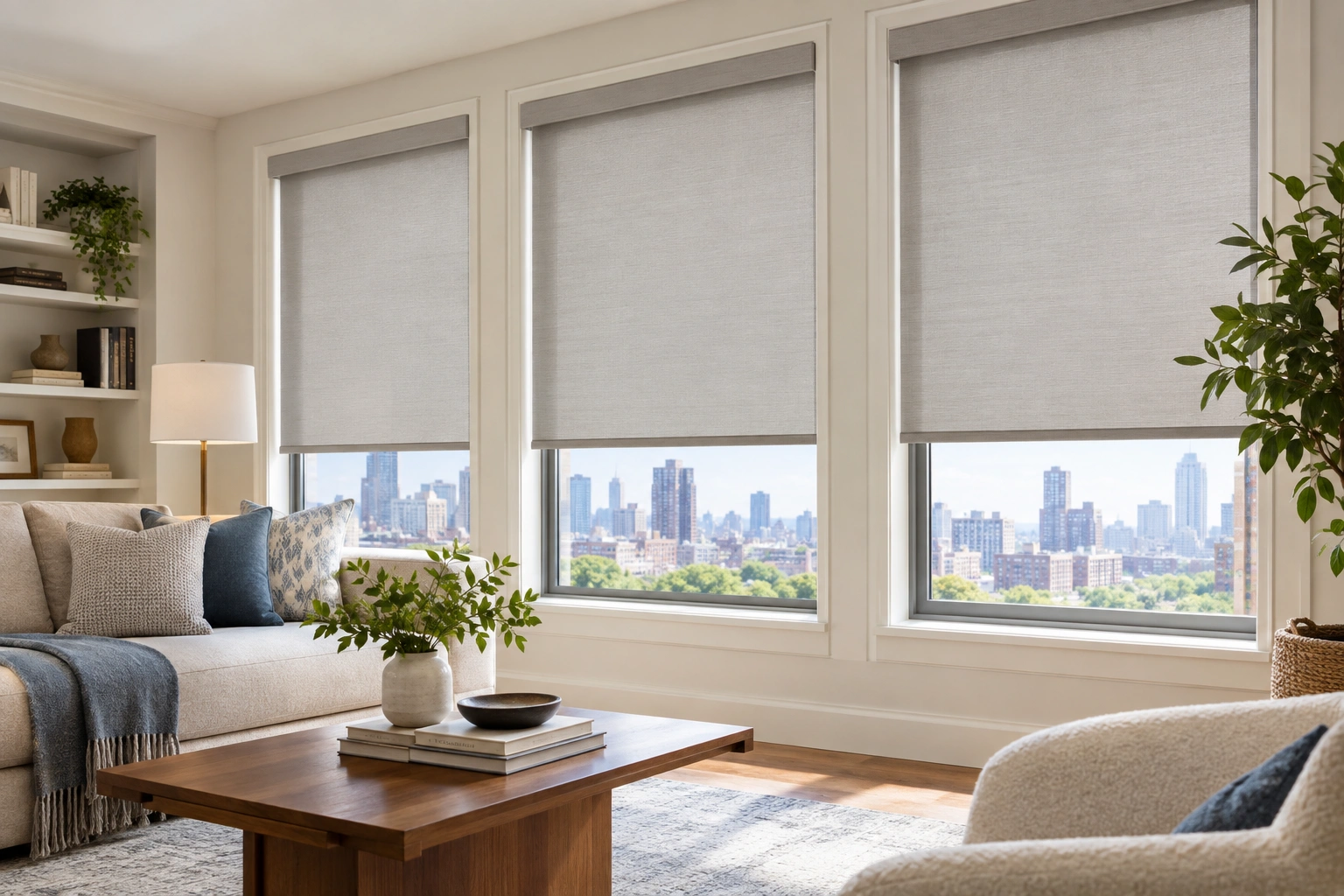
A window shade can look great in a photo and still disappoint once you use it every day. Maybe it sits slightly crooked. Maybe one side rises faster than the other. Maybe sunlight slips through wider gaps than expected, or the fabric begins to curl along the edges after a few months. Those details separate a shade that simply looks finished from one that was actually made well.
That distinction matters when comparing options for custom shades nyc, because custom work is supposed to solve the little problems that standard sizes often leave behind. The value is not just choosing a nicer fabric or getting an exact width. It is having the shade made around the window, the way the room is used, and the amount of light and privacy the space actually needs.
Table of Contents
Look at the Shade Before Looking at the Fabric
Fabric usually gets most of the attention because it is the first thing people notice. But before judging color, pattern, or texture, look at how the entire shade sits against the window.
The top should appear level. The bottom should not lean noticeably toward one side. If the shade sits inside the frame, the spacing along the edges should look intentional rather than uneven. With an outside mount, the treatment should cover the opening cleanly without looking oversized or oddly positioned.
Small imperfections in a wall or window frame can make absolute symmetry impossible, especially in older homes. That does not automatically mean anything is wrong. What matters is whether the finished installation looks balanced and whether those irregularities were handled thoughtfully rather than ignored.
The shade should also make sense for the size of the window. A material that works beautifully on a narrow opening may behave differently across a very wide span. Larger shades put more strain on rollers and hardware, which makes the quality of the internal components increasingly important.
Use It a Few Times, Not Just Once
A shade tells you a lot when you operate it.
Raise it fully, lower it again, and stop it somewhere in the middle. The movement should feel controlled. It should not need a hard pull to get started or suddenly race downward when released. If it repeatedly tilts while moving, jams near the same point, or makes unusual sounds, something may be out of alignment.
These problems are easy to overlook when a treatment is brand new because people naturally focus on how it looks. A few weeks later, however, operation becomes far more important. A shade that is used twice a day may go through hundreds of cycles in a single year.
This is also where good hardware earns its place. Much of it is hidden once installation is complete, but rollers, brackets, lift mechanisms, and other components do most of the real work. Expensive fabric paired with weak hardware is not necessarily a high-quality finished product.
Pay Attention to What Happens at the Edges
Edges reveal more than people expect.
With some materials, a slight amount of movement or variation is normal. Fabric is not sheet metal, and expecting every textile to behave with perfect rigidity is unrealistic. Still, the sides should not look poorly cut, badly finished, or noticeably different from each other.
Look at the bottom as well. Does the shade hang evenly? Does the hem or bottom rail sit straight when fully lowered? If the material has a visible weave or pattern, does it appear reasonably aligned?
These may sound like minor details, but they become more noticeable once the treatment is part of the room. A tiny flaw that barely registers during installation can become something you see every morning when sunlight highlights it.
Material choice also has to match the room. A delicate fabric may look excellent in a quiet sitting area but make little sense in a busy family space where the shade is constantly touched. There is no single “best” material. A better question is whether the material suits the way the window will actually be used.
Good Light Control Is Not the Same as Maximum Darkness
More light blocking is not always better.
In a bedroom, strong room darkening may be important. In a living room, the goal may be to soften harsh sunlight without losing the brightness that makes the space pleasant during the day. A kitchen or work area may need glare reduction while still allowing enough natural light to avoid turning on lamps at noon.
This is why judging a shade from a small sample can be tricky. Materials change when daylight passes through them. A fabric that looks dense in your hand may become much more translucent in front of a bright window.
Side gaps matter too. Even a dark material will not create strong room darkening if substantial light enters around the edges. Sometimes the solution is a different mounting style. In other cases, another type of window covering may simply be more appropriate.
Quality is partly about knowing those limitations before the shade is made rather than discovering them afterward.
Installation Should Not Look Like a Rescue Job
A little adjustment during installation is normal. A lot of improvisation is not.
Windows are not always square, mounting surfaces may be uneven, and hidden obstacles can appear once work begins. An experienced installer may need to compensate for those conditions. The finished result, however, should still look intentional.
Brackets should feel secure. Hardware should not appear unnecessarily exposed. The shade should clear handles, trim, and nearby surfaces without scraping against them. If several visible compromises are required just to make the treatment function, the measurements or planning may not have been right from the beginning.
A good installation tends to disappear visually. You notice the shade, not the effort required to keep it attached to the window.
Also Read : 6 Essential Home Care Resources That Help Montana Families Build a Stronger Aging-In-Place Plan
Quality Becomes Clear After the Newness Wears Off
The first day is probably the worst time to judge a window shade. Everything is new, the room looks different, and appearance naturally dominates the impression.
The more useful test comes later. Does the shade still roll evenly? Has the fabric kept its shape? Are the brackets secure? Does it control afternoon glare the way you expected? Do you actually enjoy using it, or have you started leaving it in one position because adjusting it is annoying?
That is where good custom work proves itself. It does not have to be flashy, unusually expensive, or filled with complicated features. It simply needs to fit correctly, move reliably, handle light in the right way, and hold up to the routine it was chosen for.
A well-made shade eventually stops drawing attention to itself. You open it when you want daylight, close it when you want privacy, and rarely have to think about whether it is doing its job. That quiet reliability may be the clearest sign of quality of all.

