


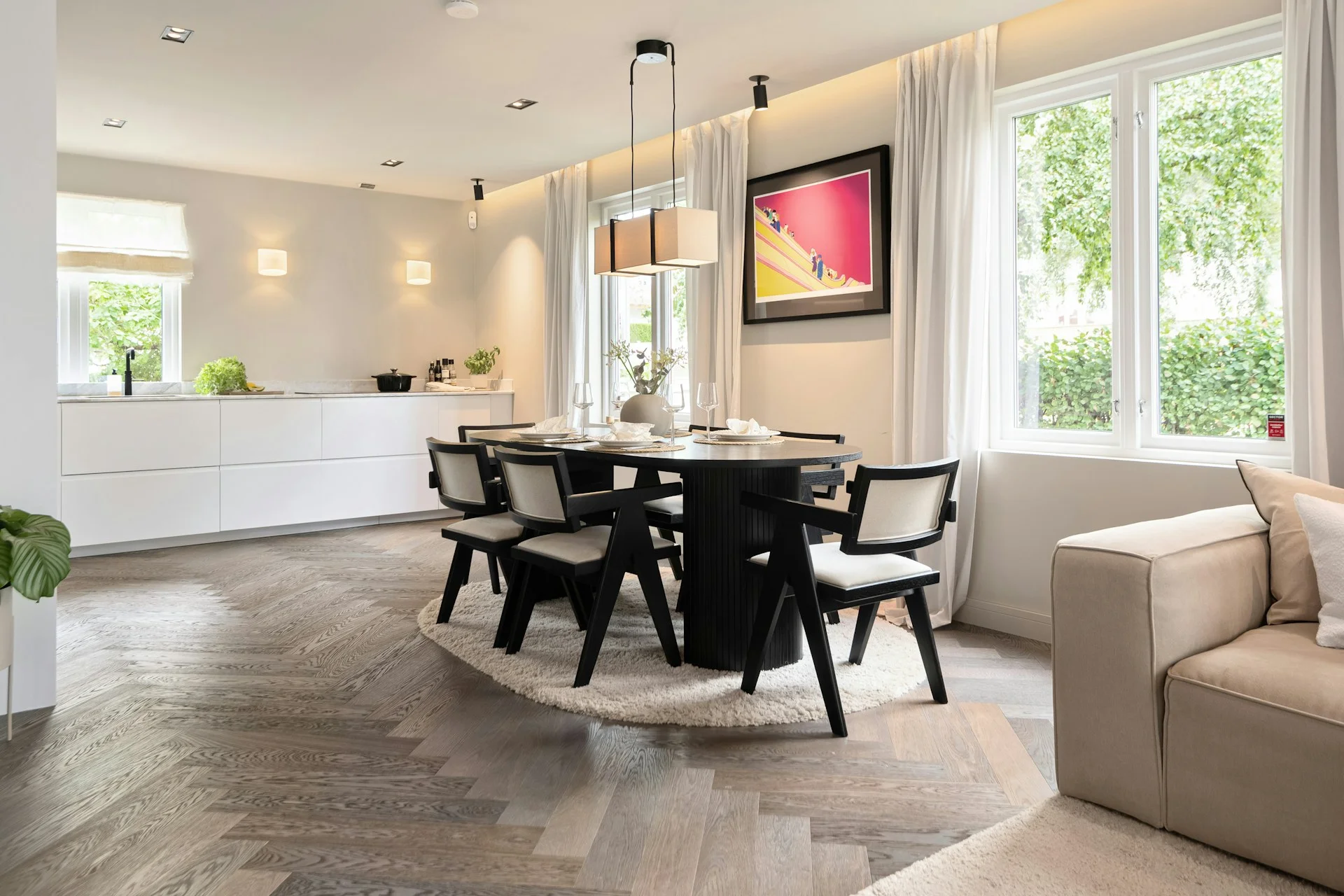
A busy living area needs surfaces that can handle dropped snacks, shifting chairs and a steady flow of guests without becoming difficult to maintain. The best choices also support the room’s mood, so durability doesn’t come at the expense of comfort or style.
Before replacing a floor, look closely at how people use the space. The answer will help you choose materials, colors and finishes that remain inviting through weeknight meals, family celebrations and casual get-togethers.
Table of Contents
The Real Demands of Social Living Areas
Start by mapping the busiest routes through your home. The path between the kitchen and dining table often gets more foot traffic than the edges of either room, while the area around a sofa may face spills, crumbs and furniture movement. These details matter more than the room’s overall size.
Thinking about planning a room around everyday movement can help you identify where furniture, flooring and circulation need to work together rather than treating each feature separately.
Consider who visits, too. Young children may sit and play on the floor, while pets can bring in grit that leaves fine scratches on hard surfaces. Guests wearing outdoor shoes add another source of dirt. Flooring with a suitable wear rating and an easy-clean finish will cope better with these repeated pressures.
Outdoor entertaining areas face similar challenges. Durable outdoor spaces rely on materials and layouts suited to regular use and exposure. Indoors, the same principle applies: match the surface to the demands of the space.
Where Durability Meets Warm Aesthetics
Hard-wearing flooring can still make a room feel relaxed and welcoming. Warm oak tones, textured neutrals and softly patterned carpets hide everyday marks better than flat, very pale finishes. A little visual variation also gives the room character without overwhelming furniture or decor.
Material choice should reflect the setting. Luxury vinyl or laminate can suit dining areas where quick cleanup is a priority. Carpet brings softness to lounges and quieter social spaces, especially when you want to reduce echoes.
Thoughtful decorative flooring choices can combine color, texture and pattern with practical performance rather than treating appearance and durability as separate goals.
Protecting Underfoot Comfort in High-Use Spots
Comfort depends on more than the visible floor covering. A suitable underlay can make carpet feel better underfoot, reduce noise and help prevent premature flattening. For hard flooring, correct preparation creates an even base and reduces the risk of movement or gaps appearing later.
Homeowners can speak with carpet and flooring specialists about suitable carpet, luxury vinyl or laminate options for rooms that need both comfort and durability.
Use washable rugs where people tend to gather, such as beneath a coffee table or beside patio doors. Make sure each rug has a non-slip backing that suits the floor below. In a dining room, choose one large enough for chairs to remain on it when pulled away from the table. This prevents chair legs from repeatedly catching the rug’s edge.
Felt pads offer simple protection under stools, side tables and dining chairs. Check them every two or three months because dust can become trapped underneath. Replace loose or worn pads before their adhesive dries out and leaves residue.
Simple Habits to Prevent Long-Term Scuffs
Place effective mats at entrances and vacuum them frequently so grit doesn’t spread into social areas. Fine particles can act like sandpaper under shoes and chair legs, gradually dulling a finish. Deal with spills promptly using the cleaning method recommended for your flooring, since excessive water or harsh products may cause discoloration.
A few routine checks will help:
- Lift furniture when rearranging the room instead of dragging it
- Vacuum busy areas once or twice a week
- Blot liquid spills with a clean cloth
- Rotate rugs periodically to balance fading and wear
- Keep spare felt pads ready for chairs and small tables
Before your next gathering, inspect the main walkway and the space around the dining table. Tightening a loose chair pad or cleaning an entrance mat takes only a few minutes, yet it can prevent the marks that become noticeable long after the guests have gone home.

