


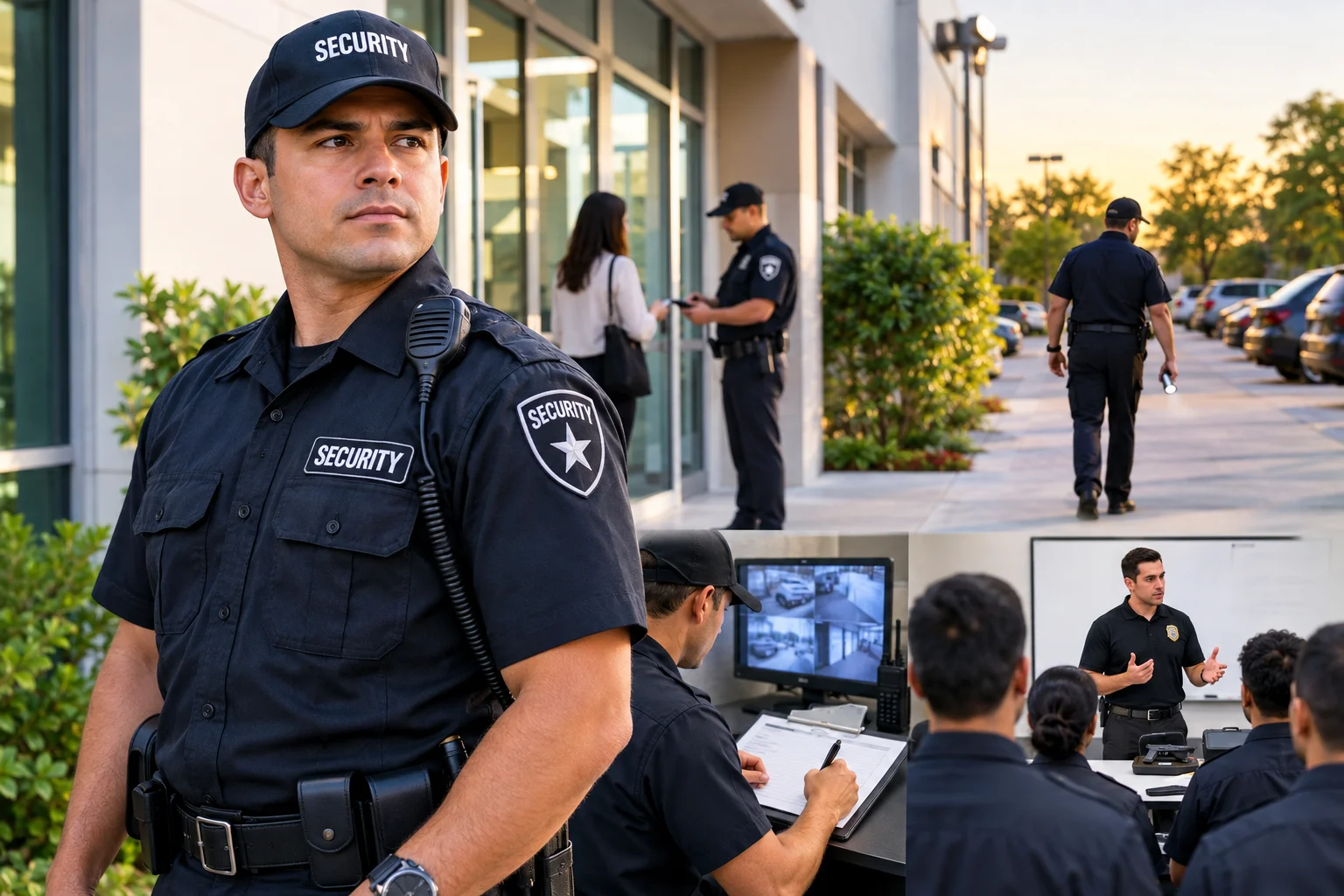
A security officer who simply stands near an entrance creates visibility, but professional security work goes much further than being seen. The value of licensed security guards in Texas comes down to the small decisions they make throughout a shift: noticing who belongs in a restricted area, recognizing unusual behavior, documenting what happened, and responding calmly when something starts to feel wrong.
The strongest officers rarely attract much attention during an ordinary day. They watch patterns, remember details, and understand the property well enough to notice when something has changed.
Table of Contents
Observation Starts Before Anything Happens
Good observation is more deliberate than looking around. An officer learns the normal rhythm of a site: delivery times, employee entrances, visitor traffic, parking activity, and areas that remain quiet for long periods.
That familiarity makes unusual activity easier to spot. A door repeatedly left open, someone lingering near a restricted entrance, a vehicle returning several times, or equipment moved outside its usual area all deserve a second look.
The goal is not to treat every unusual detail as a threat. It is to notice enough details to decide what deserves attention.
Access Control Requires More Than Checking Names
Entrances are often where routine security work becomes complicated. Employees forget identification, visitors arrive without notice, vendors show up outside their normal schedule, and people occasionally try to follow someone through a controlled door.
An effective officer follows the access procedure without turning every interaction into a confrontation. That requires clear communication and consistency. Making exceptions casually weakens the entire system because people quickly learn which rules are treated seriously and which ones are not.
Accurate visitor records matter as well. If an incident occurs later, those records create a timeline instead of leaving staff to reconstruct events from memory.
Patrols Work Best When They Are Purposeful
Walking or driving the same route on autopilot defeats much of the purpose of a patrol. A useful patrol checks specific conditions along the way.
Doors should be secured. Loading areas should look normal. Stairwells, parking areas, gates, utility spaces, and less-used parts of the property deserve attention rather than a quick pass.
Changing the timing of patrols also reduces predictability. Someone watching a property should not be able to determine exactly when an officer will appear at the same point every night.
A Good Report Saves Details Before They Disappear
Security reports sometimes seem like paperwork added after the real work is finished. In practice, a precise report often becomes one of the most useful parts of an incident response.
Names, times, locations, observations, actions taken, and who was contacted should be recorded while the details are still fresh. Statements such as “person acting suspiciously” say very little. Describing the actual behavior gives the next person something useful to work with.
Clear reporting also reveals recurring patterns. Repeated trespassing near one entrance or frequent vehicle damage in the same parking area looks different when several shifts of reports are reviewed together.
Training Matters Most When Pressure Rises
Security officers spend much of their time preventing situations from escalating. That depends heavily on communication, patience, judgment, and knowing when to call for additional assistance.
Some assignments place greater responsibility on an officer, especially where armed protection forms part of the security plan. In those roles, carrying a firearm represents only one part of the job. Officers seeking focused instruction can visit Blackledge Security & Bondsman/BEA Training in Connecticut for training centered on safe handling, secure storage, legal responsibilities, judgment, and maintaining proficiency through supervised practice. Private instruction also gives experienced personnel focused time to work on areas where their training needs improvement. An armed officer still spends far more time observing, speaking with people, documenting activity, and deciding when to avoid escalation than taking physical action.
Training loses value when treated as something completed once and forgotten. Procedures change, skills fade without practice, and even experienced officers develop habits that deserve periodic review.
Fun fact: Security officers often spend far more time writing than people expect. Incident reports, visitor logs, patrol notes, shift summaries, and equipment records create a written history of what happened on a property long after a shift ends.
Also Read : Why Workforce Management Is Different in the Food and Beverage Industry
Professionalism Shows Up in Quiet Moments
The clearest signs of good security often appear when nothing dramatic is happening. An officer notices that a gate is not closing properly, questions an unfamiliar delivery before granting access, records damaged lighting near a parking area, or reports that the same person has appeared near a restricted section several times.
None of those moments look particularly dramatic. That is exactly the point. Effective security work often prevents small irregularities from becoming larger incidents.
A uniform creates presence. What gives that presence value is everything behind it: attention, discipline, communication, accurate reporting, sound judgment, and training that remains useful long after the classroom portion ends.

