
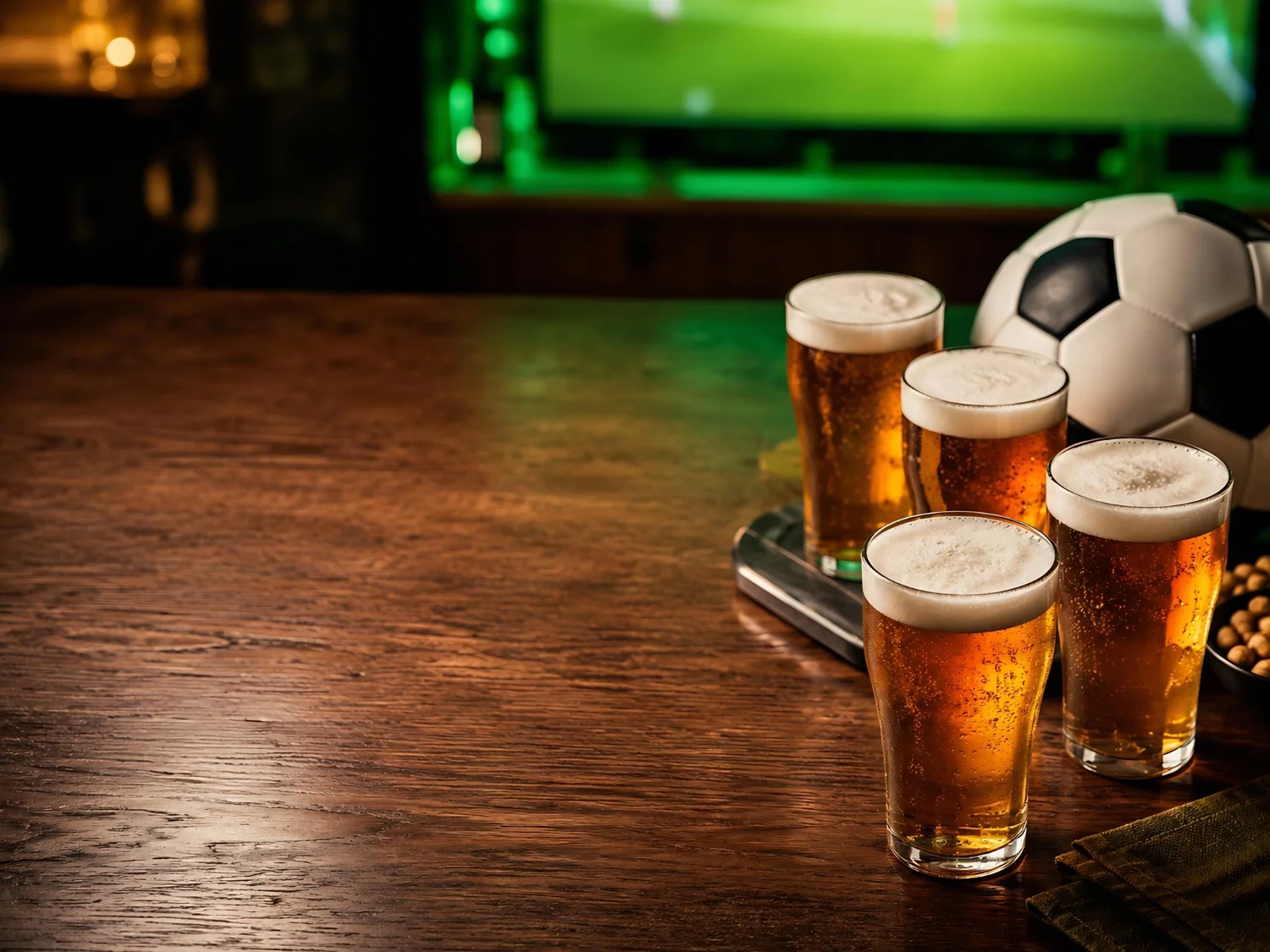
It’s the 71st minute. The home side is a goal down, and the price on them to equalize just dropped from 3.40 to 2.90. Half the room saw it happen on the screen above the taps, and somebody at table nine orders another round “for the comeback.”
That’s the quiet logic behind live odds screens in sports bars. The bar isn’t taking bets. It’s selling the next 20 minutes, and the next 20 minutes is when people order a second pitcher and the loaded fries they swore they’d skip.
Plenty of venues get this wrong, though. They hang a cluttered sportsbook feed on one TV, nobody reads it, and six weeks later it’s back to showing a muted cooking channel. So let’s look at what the bars that make it work do differently.
Table of Contents
Why a moving number keeps people in their seats
A score changes a few times a game. Odds change all the time.
That’s the whole trick. During a typical football match, in-play markets reprice after almost every corner or dangerous attack, sometimes hundreds of times before the final whistle. Put those numbers on a screen and the dead spots in a game, like a long VAR check or the third quarter of a blowout, stop feeling dead. The board keeps telling people something new, so they keep looking up.
And people who keep looking up keep ordering. A survey by CGA by NIQ and Sky Business found that 87% of fans stay out longer than usual when a live game is on, and that live sport viewers spend 36% more per month on eating and drinking out than non-viewers. Odds screens stretch that effect into the parts of a game that used to send people home early.
There’s a betting-side reason too. A 2026 national poll from Sacred Heart University found that 70.4% of bettors watch some games only because they have money riding on them. That’s a crowd that’ll happily sit through a Tuesday fixture between two mid-table sides. You just have to give them a reason to sit through it at your bar instead of on their couch.
What goes on the best live odds screens
Less than you’d think.
Most bars start by throwing the full sportsbook feed onto a 55-inch TV. It looks busy, nobody can read it from the booths, and staff stop noticing it within a week. The setups that hold up are much narrower. From what we’ve seen working, a good board usually carries:
- The live match price for the game most of the room is watching, big enough to read from 20 feet away
- One or two fast markets, like “next goal” or “next team to score,” because they settle within minutes and give people something to react to
- A clean score and clock
- One food or drink offer tied to what’s happening in the game, such as “Wings are half price until somebody scores,” which is the line on the screen your kitchen will thank you for
That last item is where the money sits. A bar can run odds-linked specials without touching betting at all. Say the underdog’s price drifts above 5.00: a bucket of five beers drops by $5 until the price comes back in. Fans start cheering for the long shot, the kitchen gets a rush during a slow stretch, and the bar never takes a single wager.
Timing specials to the swings in live betting odds
Here’s what most managers miss. The biggest price moves happen at fairly predictable moments, and those moments line up with ordering windows.
Halftime is the obvious one. Less obvious are the ten minutes after a goal, when prices reset and everyone’s arguing about what happens next. The final five minutes of a close basketball game work the same way, because the line moves on nearly every possession and nobody’s leaving to eat somewhere else.
So plan around it. If you’re running a 120-seat room on a Saturday with three games on, you already know roughly when each one hits the break. Stagger server sections so someone is walking the floor with a handheld right then, not four minutes later when the second half has kicked off and every head is pointed at a screen again. If that change adds even $3 to the average check across 300 covers, you’re looking at $900 extra on one match day. Over a season of Saturdays, that’s real money for something that costs nothing but a scheduling tweak.
The tech behind the board, and why lag kills it
None of this works if the screen runs behind the broadcast.
A stale price is worse than no price. If the room just watched a red card and the board still shows the old odds 30 seconds later, people notice, and they stop believing the screen. Once that happens, it’s wallpaper.
That means the feed matters more than the TV. Venue displays usually pull from the same odds API a sportsbook uses, so the quality depends on the operator upstream. A decent feed reprices within a second or two of a key event and suspends markets cleanly during dangerous moments, then reopens them before the crowd loses interest.
For sportsbook operators partnering with bars, this is where platform choice becomes visible to a room full of fans. Operators who need fast repricing and thousands of in-play markets in one feed often choose Kanggiten as their live betting platform, since the same odds API and match trackers that run a mobile app can also feed an in-venue display. For the bar owner, the test is much simpler. Does the board move when the crowd groans?
Where odds screens go wrong
Not every room wants them, and that’s fine. A family brunch crowd will find a wall of prices off-putting. Lots of venues keep odds on the bar-side screens only and leave the dining room on the plain broadcast.
Responsible play belongs in the plan from day one. Rotate a gambling helpline message onto the board every few minutes, and keep odds off any screen that’s visible from tables where under-age guests sit. Local licensing rules vary a lot, too. Some areas let venues show neutral odds but ban branded sportsbook promotions entirely, so check with your licensing authority before you mount anything.
And don’t let the board replace your staff. A screen gives people a reason to stay. A server who notices table four just watched their parlay die on the last play, and sends over a basket of fries, gives them a reason to come back next Saturday.
What a good night looks like
Walt Disney once said, “Do what you do so well that they will want to see it again and bring their friends.” A sports bar with a sharp odds board is selling exactly that kind of night.
Kickoff at 8. Kitchen slammed by 8:40. A halftime round at 8:47, then a late price swing at 9:35 that keeps the back booth ordering nachos right up to the final whistle. Nobody bet a cent with the bar. They just stayed for one more number.

