


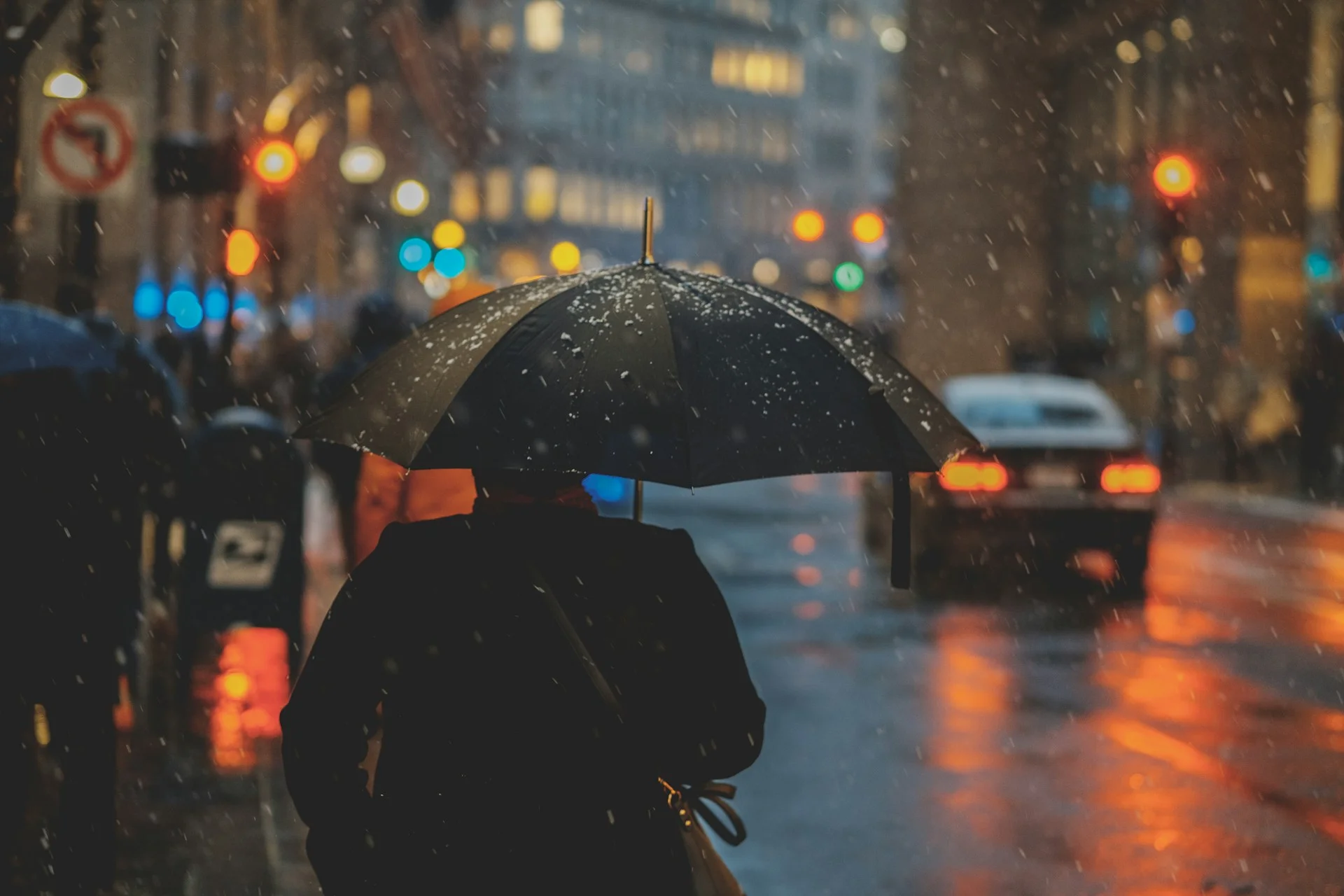
Getting caught in heavy rain on your daily commute can leave you with soaked clothes, uncomfortable shoes, and damaged belongings before the workday even begins. Relying on an umbrella alone often isn’t enough, especially when strong winds and crowded streets make staying dry difficult. The right waterproof outerwear, smart layering, and simple packing habits can help you stay comfortable, protect your essentials, and handle unpredictable downpours with confidence.
Table of Contents
Walking Through Unpredictable Downpours
Check the hourly forecast before leaving, then dress for the wettest part of your travel window. A 20-minute walk at 8 a.m. may be dry while the return trip brings steady rain and lower temperatures. Forecast details such as timing, wind, and rainfall intensity are more useful than the daily weather symbol.
Plan your clothing in layers. A lightweight base layer moves moisture away from your skin, while a thin insulating layer helps on cold days. The outer layer handles rain and wind. The National Park Service layering guide explains how separate base, middle, and outer layers allow you to adjust as conditions change. This same principle works well on a train platform, city sidewalk, or bike-and-walk commute.
Ventilation matters because sweat can leave you feeling as damp as rain. Open pit zips, loosen the collar, or remove the middle layer if you start getting warm. Once you stop moving, close the vents before your body cools.
Pay close attention to footwear too. Water-resistant shoes with a textured sole offer better comfort on slick pavement, though ankle height and fit matter as much as the label. Add quick-drying socks and keep a spare pair at work. Crowdsourced rainy commute gear advice also points to a practical truth: commuters are often happiest when they protect themselves from head to toe instead of relying on one item.
Why Typical Umbrellas Often Disappoint
Umbrellas work best during light rain with little wind and enough space to carry one safely. Their weak points become clear in crowded areas. A narrow sidewalk, busy station entrance, or sudden gust can turn an umbrella into an awkward object that drips on other people and occupies one of your hands.
Coverage is another limitation. An umbrella may keep your head and upper body dry while wind-driven rain reaches your sleeves, pants, and bag. Water also runs from the canopy when you close it, which creates a storage problem on public transit or inside an office. Compact models fit neatly in a bag, but their smaller canopies and lighter frames may offer less protection in bad weather.
If you carry an umbrella, choose one with a comfortable handle, a secure closing strap, and enough canopy width for you and your bag. Shake off excess water outdoors when possible, then place it in a sleeve that will contain drips. Never leave a damp umbrella folded for days because trapped moisture can lead to odors and fabric damage.
For frequent exposure to wind and sustained rain, hands-free protection is usually more practical. A hooded outer layer stays with you as you carry groceries, tap a transit card, or check directions. Commuters comparing more substantial designs may consider the Keela MK6 jacket, a professional-grade waterproof outer layer built for harsh outdoor conditions. Its field-oriented construction may suit people who spend extended periods outside and value durable coverage over compact packability.

Image Credit: Unsplash
Investing in Field-Tested Outerwear
Start with fit because a waterproof jacket can only perform properly if it moves with you. Try it over the layers you normally wear and reach forward as if holding a bike handlebar or carrying a tote. The hem should stay in place, the shoulders shouldn’t pull, and the sleeves should continue to cover your wrists.
Next, inspect the places where water commonly enters. A useful commuter jacket has an adjustable hood that turns with your head, protected closures, and cuffs that sit securely around gloves or bare wrists. A longer back adds coverage when you bend forward. Sealed seams also matter since stitched fabric can allow water through during sustained rain if the seam construction lacks protection.
Breathability deserves equal attention. Waterproof fabrics block outside moisture, but body heat still needs a way out. Look for mechanical vents, adjustable openings, and enough room to create airflow. A heavy jacket may be suitable for cold winter rain yet feel uncomfortable during a humid summer storm. Some commuters keep a lighter shell for warm months and a more protective coat for colder weather.
Style doesn’t have to disappear on wet days. The rainy-day outfit guide shows how practical coats, boots, and easy layers can form a polished outfit. Choosing clothing that works across changing weather conditions also involves considering fabric weight, coverage, and how different layers work together. Neutral colors are simple to coordinate with office clothing, while reflective details improve visibility in dim conditions.
Care affects performance over time. Follow the garment label, close fasteners before washing, and avoid ordinary fabric softener unless the manufacturer permits it. Dirt and body oils can reduce the performance of a water-repellent surface. If water stops beading and begins soaking into the face fabric, clean the jacket and renew its finish using the recommended treatment.
Keep Everyday Essentials Completely Dry
A waterproof jacket protects your body, but a soaked laptop or paper document can still ruin the day. Treat storage as a separate part of your rain setup. Many backpacks use water-resistant fabric without being fully waterproof, especially around zippers, seams, and the back panel.
Place electronics and important papers inside sealed pouches before packing them. A roll-top dry bag works well for a laptop sleeve, while a smaller zip pouch can hold a phone, charging cable, and earbuds. Even a sturdy reusable bag provides an extra barrier in an emergency. Keep items that tolerate moisture, such as a lunch container, separate from electronics so condensation or a loose lid can’t cause damage.
Pack with access in mind. Your transit card, keys, and phone should sit in pockets you can reach without opening the main compartment in heavy rain. Avoid outer mesh pockets for anything absorbent or valuable. If flooding is possible along your route, review official flood safety guidance and avoid walking through water that covers the pavement. Standing water can hide uneven ground, open drains, and moving currents.
Once you arrive, unpack damp items promptly. Hang your jacket where air can circulate, open your bag and remove wet pouches. Stuffing everything under a desk until evening gives moisture time to spread and odors time to develop.
A small workplace kit can make the final hours of a rainy day far more comfortable. Spare socks, a compact towel and a reusable bag for wet clothing take up little drawer space. When the return commute begins, you’ll have dry essentials, a properly aired outer layer and no unpleasant surprise waiting inside your bag.

