


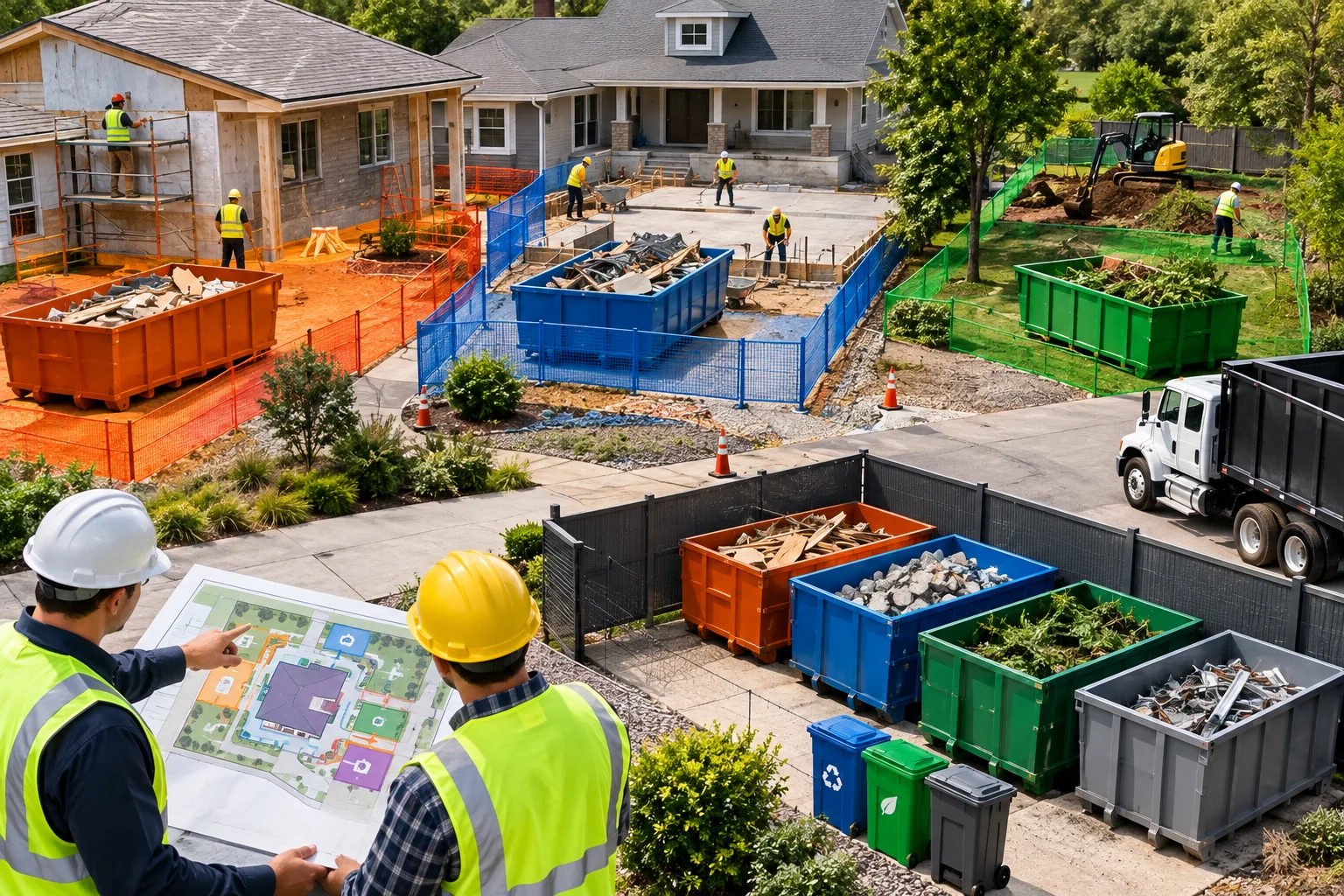
Construction projects with multiple work zones can become difficult to manage if waste is not planned early. Contractors may have crews working in a kitchen, bathroom, basement, garage, exterior wall, roofline, patio, or detached structure at the same time. Each area creates its own debris, and each crew needs space to move, stage materials, and keep the next task ready.
Without a clear waste plan, debris from one zone can interfere with another. Drywall scraps may block a hallway. Lumber cutoffs may crowd a driveway. Roofing debris may limit exterior access. Packaging may pile up where new materials need to be staged. A good disposal plan helps each work zone stay organized without letting the whole property turn into one large cleanup problem.
Table of Contents
Start With the Full Property Layout
Before work begins, contractors should review the entire property and identify every active work zone. This may include interior rooms, exterior elevations, garages, driveways, yards, patios, sheds, additions, or utility areas. Each zone should be considered separately, but the waste plan should connect them into one practical site flow.
The layout review should also identify entrances, walkways, parking areas, delivery routes, homeowner access points, equipment paths, and service truck access. Multiple work zones often compete for the same limited space, so it is important to decide where debris will move before crews begin removing materials.
A clear layout helps prevent one work area from blocking another.
Identify the Debris From Each Zone
Different work zones create different types of debris. A bathroom may produce tile, drywall, fixtures, vanities, mirrors, and plumbing-related scraps. A kitchen may create cabinets, counters, flooring, trim, appliances, and packaging. Exterior work may add siding, roofing, wood, insulation, fasteners, and yard debris.
Contractors should list the expected debris from each zone before scheduling disposal. This helps identify which materials are bulky, heavy, sharp, dusty, or worth saving. It also helps crews understand which debris should go directly to the dumpster and which items should be staged separately.
Knowing the waste mix early makes the cleanup plan easier to manage.
Choose One Main Disposal Point
When several areas are active at once, crews need a clear place for approved debris. A dumpster should be placed where it can serve the property efficiently without blocking work, deliveries, or daily access. The location may not be perfect for every zone, but it should be practical for the overall project.
Working with Temporary Dumpster can help contractors coordinate dumpster rental placement and service timing for projects with several active work areas. A well-placed container gives crews one reliable disposal point instead of allowing debris to scatter across the site.
The goal is to make waste removal predictable for every crew on the property.
Create Debris Routes for Each Work Zone
Each work zone should have a planned route to the dumpster. Interior debris may move through a hallway, garage, porch, or side door. Exterior debris may move across a yard, driveway, deck, or temporary path. Detached structures may require a separate route across the property.
These routes should be cleared before heavy work begins. Tools, cords, furniture, pallets, vehicles, and new materials should not block the path. If a route passes through finished areas, contractors may need floor protection, corner protection, or temporary barriers.
Planned routes reduce double handling and help keep debris from spreading.
Keep Work Zones From Overlapping
Multiple work zones can create confusion when materials, tools, and debris drift into each other. One crew may leave scraps in a hallway used by another crew. Exterior debris may be staged where interior materials are supposed to arrive. A garage may become a catch-all for everything no one has time to load.
Contractors should assign clear boundaries. Each zone should have a place for tools, a place for reusable materials, and a path for debris. Shared areas should be kept as open as possible.
When boundaries are clear, crews spend less time moving each other’s mess.
Coordinate Waste Removal with Deliveries
Projects with several active zones usually require steady deliveries. Cabinets, drywall, flooring, lumber, siding, roofing, fixtures, insulation, trim, and appliances may all arrive while old materials are still being removed. If debris fills the best staging area, new materials may be unloaded in the wrong place and moved again later.
Contractors should compare the cleanup plan with the delivery schedule. Before major deliveries arrive, debris should be loaded and staging areas should be cleared. If the dumpster sits near a delivery zone, service access and unloading space should remain open.
Waste removal and material staging should be planned together.
Watch for Heavy Debris
Some zones may create heavier debris than others. Tile, plaster, concrete, brick, stone, roofing materials, old tubs, countertops, wet drywall, and masonry can add weight quickly. A dumpster may still have visible space but already be carrying a dense load.
Contractors should identify heavy debris zones early. If one area will produce most of the weight, crews may need to load carefully or schedule service before the container becomes too heavy. Heavy material should not be mixed carelessly with lighter debris if it will create service problems.
Weight planning helps prevent the dumpster from becoming a bottleneck.
Separate Salvageable Materials
Multiple work zones often produce materials the homeowner or property owner may want to keep. Doors, trim, cabinets, hardware, light fixtures, shelving, appliances, windows, pavers, or lumber may be reusable. These items should not be mixed with broken debris.
Contractors should create a separate salvage area before tear-out begins. Crews should know what must be saved and who approves questionable items. If several zones are active, labeling materials by room or area can prevent confusion later.
Clear separation protects useful items and avoids unnecessary disputes.
Communicate the Plan to Every Crew
A waste plan only works if every crew understands it. On multi-zone projects, subcontractors may arrive at different times and focus only on their assigned area. If they do not know the disposal rules, they may block routes, fill the dumpster too early, or leave debris in shared spaces.
Contractors should explain where the dumpster is, which routes to use, what can be loaded, what should be separated, and which areas must stay clear. These instructions should be repeated as new crews arrive.
Simple communication keeps the site more consistent from one zone to the next.
Schedule Cleanup Checkpoints
Large multi-zone projects need cleanup checkpoints, not just final cleanup. A checkpoint may happen after demolition in one area, before inspections, before new material deliveries, before drywall, before flooring, before exterior work shifts, or before a homeowner walkthrough.
During each checkpoint, crews should load debris, sweep routes, check sharp scraps, clear shared paths, organize tools, and review dumpster capacity. These resets help prevent small piles from turning into property-wide clutter.
Regular checkpoints also make it easier to see which zones are truly ready for the next phase.
Protect Homeowner and Occupant Access
Many projects with multiple work zones happen while the property is still occupied. Homeowners may need access to bedrooms, bathrooms, kitchens, laundry areas, garages, driveways, pets, mail, or outdoor spaces. Debris should not make the entire property feel unusable.
Contractors should identify which paths must stay open every day. If access will change, occupants should know before it happens. At the end of each day, shared paths should be cleared and small debris should be collected.
Protecting access helps reduce complaints and keeps the project easier to live around.
Keep Service Access Open
The dumpster must remain reachable for pickup or replacement. Multi-zone projects can quickly crowd the area around the container with vehicles, pallets, tools, lumber, fixtures, and debris. If the service truck cannot reach the dumpster, cleanup may stall.
Contractors should keep the approach clear from delivery through final pickup. No crew should use the service path as a storage area. If a pickup or swap is scheduled, everyone on-site should know what needs to move before the truck arrives.
Service access is part of the work plan, not extra space.
Adjust as Work Zones Change
Multiple work zones rarely stay active in the same way from start to finish. One room may move from demolition to rough-ins while another begins tear-out. Exterior work may shift from one side of the property to another. New materials may arrive as old debris continues to leave.
Contractors should review the waste plan as phases change. Debris routes may need to move. Staging areas may need to be cleared. Dumpster service may need to be scheduled earlier than expected.
A flexible plan keeps cleanup aligned with the actual work happening on-site.
Also Read : 6 Best Payroll Services for Growing Businesses
Avoid Common Multi-Zone Waste Mistakes
One common mistake is allowing every work zone to create its own debris pile. Another is placing the dumpster without thinking about how each area will reach it. Contractors should also avoid using garages, hallways, driveways, or patios as overflow disposal areas.
It is also a mistake to wait until all zones are messy before resetting the site. By then, crews may spend more time clearing space than doing the planned work. A better approach is steady loading, clear routes, and regular cleanup checkpoints.
Waste planning for contractors managing multiple work zones on one property requires organization before debris starts moving. Each area may create different materials, but the site needs one coordinated cleanup plan that protects access, staging, deliveries, service routes, and crew efficiency.
By reviewing the full layout, identifying debris by zone, choosing a practical dumpster location, planning routes, separating salvage, communicating with crews, and scheduling cleanup checkpoints, contractors can keep complex projects cleaner and easier to manage. A strong waste plan helps each work zone move forward without letting debris from one area slow the rest of the job.

