


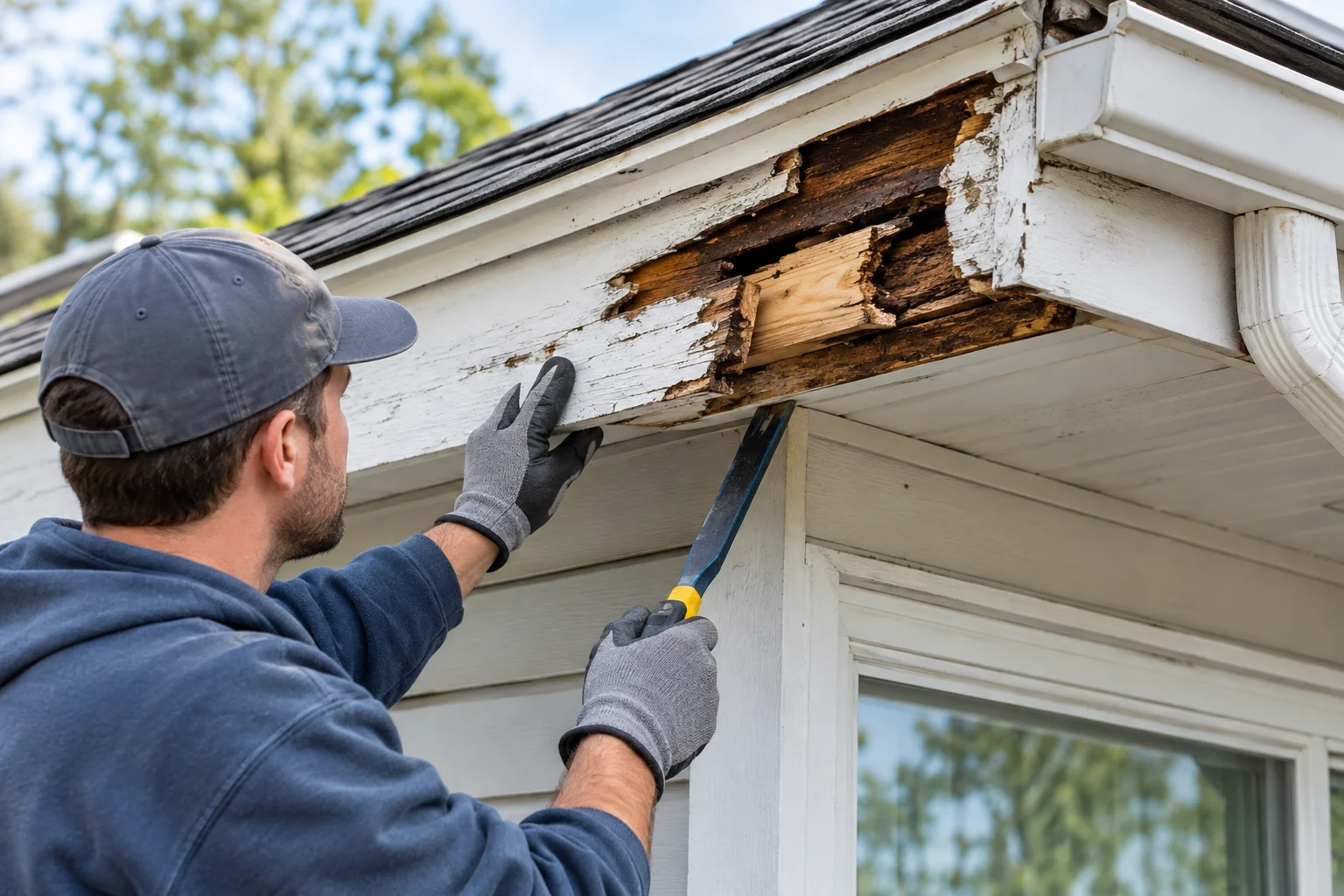
Rotted exterior wood rarely starts as an obvious structural problem. It often begins with peeling paint, a soft corner on a trim board, a dark stain near the roofline, or a section of siding that no longer sits flat. By the time the wood feels spongy or starts breaking apart, moisture has often been present for much longer than the visible damage suggests.
Replacing the damaged board fixes what is easy to see, but lasting exterior wood repair solutions depend on finding out why the wood stayed wet long enough to rot in the first place. If that part is ignored, the new material may end up in the same condition.
Table of Contents
Start With the Area Around the Damage
Exterior trim, fascia, soffits, and siding all sit in places where water has to move away from the building correctly. Small gaps around joints, worn sealant, loose flashing, cracked paint, or poorly directed runoff give water a path behind the surface.
The location of the rot often points toward the source. Damage near the bottom of siding may come from repeated splashback. Rot around a window or door often starts where water enters behind trim. Soft fascia near the roof edge may be tied to runoff that is not draining where it should.
Looking beyond the damaged board prevents the repair from becoming a repeated cycle.
Fascia and Soffits Often Show Trouble First
Fascia boards take a lot of abuse because they sit along the roof edge. Water flowing over a clogged gutter, leaking behind it, or collecting near the edge keeps the wood damp. Once paint or protective coating breaks down, moisture enters much faster.
Soffits are slightly more sheltered, yet they still suffer when water travels behind fascia or enters through roof-edge gaps. Sagging sections, discoloration, peeling paint, or visible separation often signal that moisture has reached areas that are normally hidden.
Replacing only the surface board makes sense when the damage is truly isolated. If the surrounding wood feels soft or stained, the repair area usually needs to extend farther.
Roof Problems Often Sit Behind Exterior Wood Damage
Sometimes the carpentry is not the original problem at all. Water from a roof leak, damaged flashing, worn roof edges, or poor drainage often travels before it becomes visible. By the time a homeowner notices rot on fascia, soffit, trim, or siding, the entry point may be several feet away.
That is why repeated exterior wood damage deserves a closer look at the roof above it. A board that rots again after replacement is a strong sign that water is still entering somewhere, and http://619roofing.com becomes relevant at the point where the roof itself needs to be checked for the source. Loose materials, failed flashing around roof penetrations, damaged edges, or gutters pulling away from the roofline may keep directing moisture into the same area.
Repairing the wood without correcting that source treats the symptom rather than the cause. Once the water path is stopped, new carpentry has a much better chance of staying dry.
Exterior Trim Needs More Than Fresh Paint
Paint protects wood only when the surface underneath is sound. Painting over soft, cracked, or damp material hides the problem for a while, but it does not stop decay.
Trim around windows and doors deserves close attention because joints and corners collect water easily. Small openings expand as wood swells and dries. Once the surface starts separating, moisture reaches areas that are difficult to dry.
A proper repair removes weakened material, checks nearby sections, seals open joints, and gives the replacement wood a clean, dry surface before finishing.
Fun fact: Wood rot requires moisture to stay active. Dry wood does not continue decaying at the same rate, which is why stopping water intrusion matters just as much as replacing damaged material.
Also Read : The Best Girls’ Nights Start With Simple Food and Better Drinks
Small Repairs Are Easier Before the Damage Spreads
Exterior rot rarely improves on its own. Once water reaches hidden wood behind trim or siding, the damaged area often grows beyond what is visible from the outside.
Catching a soft fascia corner or cracked trim board early usually means a smaller repair. Waiting until the wood crumbles, siding loosens, or soffits begin to sag often leads to more material being removed.
The best repair is not simply the one that makes the exterior look new again. It is the one that leaves the area dry enough to stay that way. Finding the source of moisture first turns a cosmetic fix into a repair that actually lasts.

